APIs

Job Listings



















What is a jobs API?
A jobs API is a programmatic interface that returns job posting data as structured JSON instead of pages you have to scrape. You query by company, title, location, or posting date and get back full descriptions with company context.
Website domain
Company size
Largest headcount country
Investment stage / valuation
Acquisition status
Full job description
Job URL
Job category / department
Number of openings
Workplace type
(onsite, remote, hybrid)
Date added / last updated
Reposted job flag
City
District
State
Country (with codes)
Pincode
Location text
Geocodes for district and state
How it works
You send a query to the job listings endpoint. Filter by title, category, location, workplace type, posting date, or number of openings, using any of Crustdata’s 350+ filters on the company side. Full parameter reference in the API docs.
Coverage and freshness
datapoints per listing
sources per company record
pulled live, not weekly dumps
alerts on new postings
Popular use cases
Use filters like job title, job category and number of openings to spot companies rapidly hiring in sales, engineering, or other functions. This is useful as a signal for outbound and for offering your recruiting services. For investment it’s a strong signal of company growth.


Filter by job locations and look for listings in countries, cities or regions the company hasn’t previously hired in. This is useful for location-based outreach. For investors, it’s a sign of domestic or international expansion of the company.
Use the workplace type filter to identify fully remote opportunities. This is useful for recruitment platforms indexing remote jobs or recruiters sourcing global candidates.
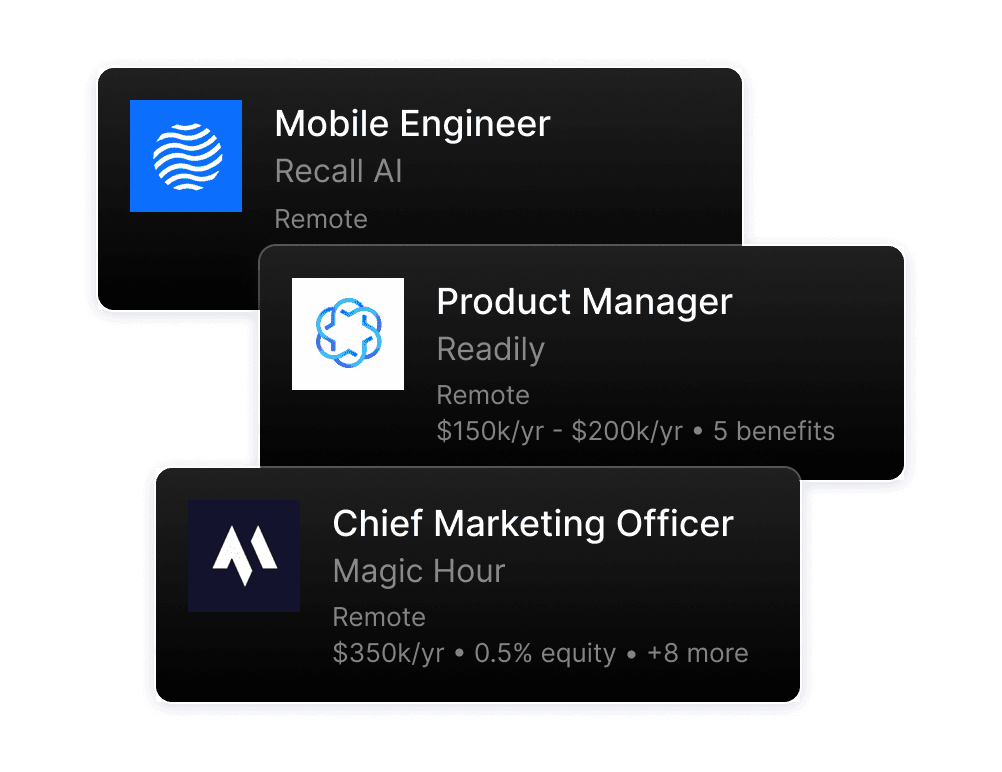

Spot listings for new roles like “Founding Product Designer” or “First AE” to find companies building out early teams. This is useful for outbound sales or early-stage investors.
How Crustdata compares to Coresignal and PDL
37 documented filter fields,
including geo radius
14 filter parameters on the Base
Jobs API. Multi-source requires
Elasticsearch DSL queries
20+ on Base records, up to 80+
on Multi-source
Yes. Fetch a company’s postings
fresh at request time
No. Active postings rechecked
within 24 hours
Real-time pull, plus indexed dataset
with per-record update timestamps
Yes. Watcher pushes to webhook,
Slack, or email when tracked
companies’ hiring data changes
No. Webhooks cover employee
profile changes only
No. Webhooks cover person data
only, on enterprise plans only
Yes. Headcount, funding, revenue, followers, and competitors on every
job row
Frequently asked questions
What is a jobs API?
A jobs API returns job posting data as structured JSON you can query programmatically. Instead of scraping career pages or job boards, you filter by title, company, location, or date and receive full listings with descriptions. Crustdata’s version adds company context like headcount and funding to every posting.
What data does the Jobs API return for each posting?
Each listing carries 30+ datapoints across three groups. Job details include the full description, URL, category, number of openings, workplace type, dates, and a reposted flag. Location data covers city through country with geocodes. Company info adds domain, industry, size, investment stage, and acquisition status.
How often is job listing data updated?
Listings are pulled in real time rather than shipped as weekly or monthly dumps, so postings and their company context reflect the current state when you query.
Do you provide historical job posting data?
Historical counts of job openings are available, which is what trend analysis actually needs: openings over time by company, department, or location. Full historical listing objects, meaning the text of postings that closed long ago, are not stored. For tracking hiring trajectories the count series does the job.
How is this different from scraping job boards myself?
Scraping gets you raw listings from one board at a time, breaks when markup changes, and tells you nothing about the company. The Jobs API returns structured, deduplicated postings through one endpoint, and each one arrives tied to a live company record with headcount, funding, and growth signals.
How many credits does a jobs API call cost?
Job listing calls draw from the same credit balance as every other Crustdata endpoint. There is no separate jobs subscription. The per-endpoint cost table on the pricing page shows how a jobs call compares with enrichment and search calls.
Can I filter jobs by title, location, company, or posting date?
Yes. Filters cover job title, category, location down to city, workplace type including remote, posting date, and number of openings. Because postings sit on the company graph, you can also filter by company attributes such as headcount growth or last funding round, using the same 350+ filters as company search.